

Heat transfer Chapter 5: Porous media and heat exchangers
This chapter introduces reduced-order heat transfer modeling for complex systems whose geometric detail cannot be resolved explicitly. Porous media models and heat exchanger models are presented as volume-averaged representations that replace detailed solid–fluid interfaces with equivalent momentum and energy source terms. The chapter explains the Representative Elementary Volume (REV) concept, local thermal equilibrium assumptions, one- and two-equation energy models, and practical CFD implementations for porous materials and compact heat exchangers.
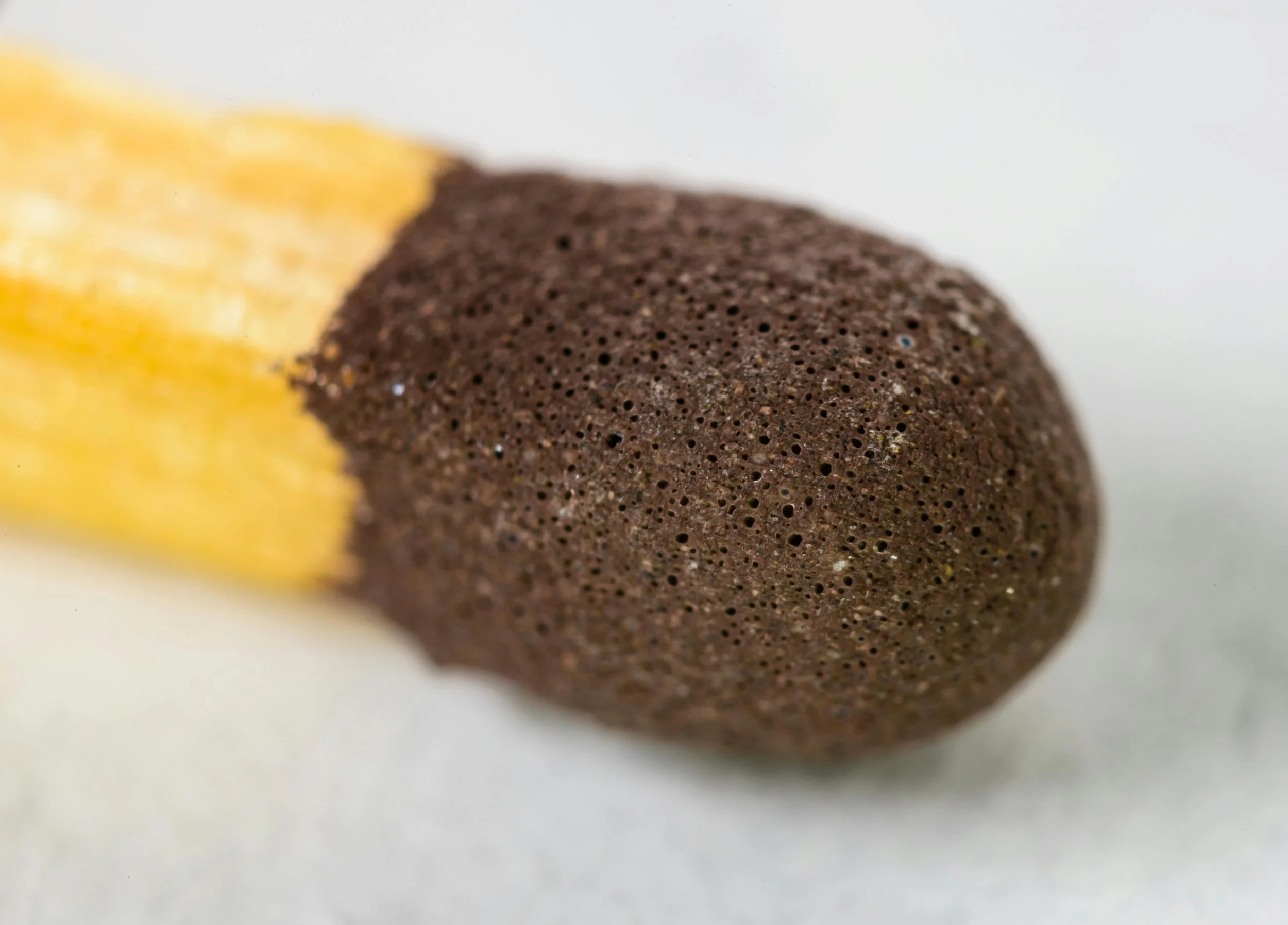
Why This Chapter Exists
Many real engineering systems:
Contain complex internal geometries
Span multiple length scales
Are impossible to mesh explicitly
Examples:
Packed beds
Filters
Catalytic converters
Radiators
Compact heat exchangers
Instead of resolving geometry:
Its effect is modeled
Using momentum losses and heat exchange source terms
This chapter formalizes that abstraction.
Porous Media: Conceptual Foundation
3.1 What Is a Porous Medium?
A porous medium consists of:
A solid matrix
An interconnected pore space filled with fluid
Key features:
Geometry is highly complex
Pore scale is much smaller than system scale
Transport occurs in both phases simultaneously
3.2 Characteristic Variables
Important descriptors:
Porosity: fraction of volume available to fluid
Global vs effective porosity
Specific surface area: fluid–solid interfacial area per volume
Permeability: resistance to flow through the matrix
These properties encode geometry into lumped parameters.
Representative Elementary Volume (REV)
The REV concept enables upscaling.
Key idea:
There exists a volume large enough to be statistically representative
But small enough to preserve spatial variation
At the REV scale:
Governing equations are volume-averaged
Microscopic detail is replaced by effective properties
This is the foundation of porous-media CFD models.
Momentum Modeling in Porous Media
In porous zones:
Continuity remains unchanged
Momentum equations gain a sink term
Physical meaning:
The porous matrix resists flow
Resistance depends on velocity magnitude
Two contributions:
Viscous resistance (low velocities)
Inertial resistance (high velocities)
This framework generalizes Darcy’s law.
Velocity Definitions
Two velocity concepts exist:
Superficial velocity
Based on total cross-sectional area
Used by default in Fluent
Physical (pore) velocity
Accounts for porosity
More accurate for heat and mass transfer
Choosing between them affects:
Convective heat transfer
Energy source terms
Heat Transfer in Porous Media
7.1 Local Thermal Equilibrium (LTE)
The one-equation model assumes:
Fluid and solid matrix have the same temperature locally
Heat exchange between phases is fast
Implications:
Single energy equation
Effective thermal conductivity
Valid when:
Pore sizes are small
Heat exchange is strong
7.2 Effective Thermal Conductivity
Effective conductivity represents:
Conduction in solid
Conduction in fluid
Thermal dispersion due to velocity fluctuations
It depends on:
Porosity
Material properties
Flow regime
Matrix geometry
This is a closure problem, often empirical.
Non-Equilibrium Heat Transfer
8.1 Two-Equation Model
The non-equilibrium model relaxes the LTE assumption:
Fluid and solid have separate temperatures
Two coupled energy equations are solved
Coupling occurs through:
Interfacial heat transfer coefficient
Used when:
Large pores
High heat fluxes
Rapid transients
Strong phase-to-phase imbalance
8.2 Modeling Implications
Increased computational cost
Additional closure parameters required
More sensitive to mesh and material data
Often implemented using UDFs for flexibility.
Heat Exchangers as Porous Systems
9.1 Why Heat Exchangers Are Special
Heat exchangers:
Are porous to the primary flow
Contain an auxiliary flow (coolant)
Exchange heat without mixing fluids
Explicitly meshing fins and tubes is impractical in system-level CFD.
Heat Exchanger Modeling Philosophy
Two goals:
Predict pressure loss in the primary flow
Predict heat transfer to/from the auxiliary fluid
This is achieved by:
Treating the exchanger core as a porous zone
Embedding heat exchange models inside it
Macro Heat Exchanger Models
11.1 Core Idea
Auxiliary flow is treated as 1D
Primary flow is fully 3D
Heat exchanger core is divided into macroscopic cells (“macros”)
Each macro:
Applies an energy balance
Exchanges heat locally with the primary flow
11.2 Effectiveness-Based Model
Uses a global effectiveness:
Interpolated from performance curves
Applied locally across the core
Assumptions:
Auxiliary fluid hotter than primary
Primary heat capacity rate is limiting
Simple and robust, but restrictive.
11.3 NTU-Based Model
More general:
Works regardless of which fluid is hotter
Handles reverse flow
Allows variable properties
Effectiveness is computed from NTU and capacity ratios.
Preferred for:
General engineering simulations
Automotive and HVAC applications
Dual-Cell Heat Exchanger Model
For highly non-uniform auxiliary flow:
Two overlapping meshes are used
One for primary flow
One for auxiliary flow
Coupled only through heat transfer.
Advantages:
Captures coolant maldistribution
Allows variable density and temperature fields
Limitations:
Higher cost
More setup complexity
Heat Exchanger Groups
Heat exchangers can be:
Connected in series
Connected in parallel
Useful for:
Radiator stacks
Multi-stage cooling systems
Grouping allows system-level modeling without geometric detail.
Engineering Intuition
Porous models trade geometry for parameters
Accuracy depends more on closure quality than mesh density
One-equation models are usually sufficient
Two-equation models are reserved for strong thermal imbalance
Heat exchangers are structured porous media with an extra energy pathway
Rule of thumb:
If geometry matters more than flow structure, use a porous model.
Study Priorities
If time is limited, the most important concepts to look into:
REV concept and upscaling logic
Porosity, permeability, and resistance terms
One- vs two-equation energy models
Effective thermal conductivity meaning
Macro vs dual-cell heat exchanger models
When simplification is justified
Key Takeaways
Porous media models replace geometry with averaged physics.
Momentum losses encode flow resistance.
Heat transfer can be modeled under equilibrium or non-equilibrium assumptions.
Effective properties are the central modeling challenge.
Heat exchangers are porous media with auxiliary energy transport.
Reduced-order models enable system-scale CFD.