

Combustion and Reactions Chapter 2: Laminar premixed flames
This chapter introduces laminar premixed combustion and the physical mechanisms governing flame propagation. It explains flame structure, flame speed, stabilization mechanisms, and combustion regimes. The chapter also connects combustion theory to CFD implementation, including combustion models in ANSYS Fluent, detailed chemistry mechanisms, and chemistry acceleration techniques.
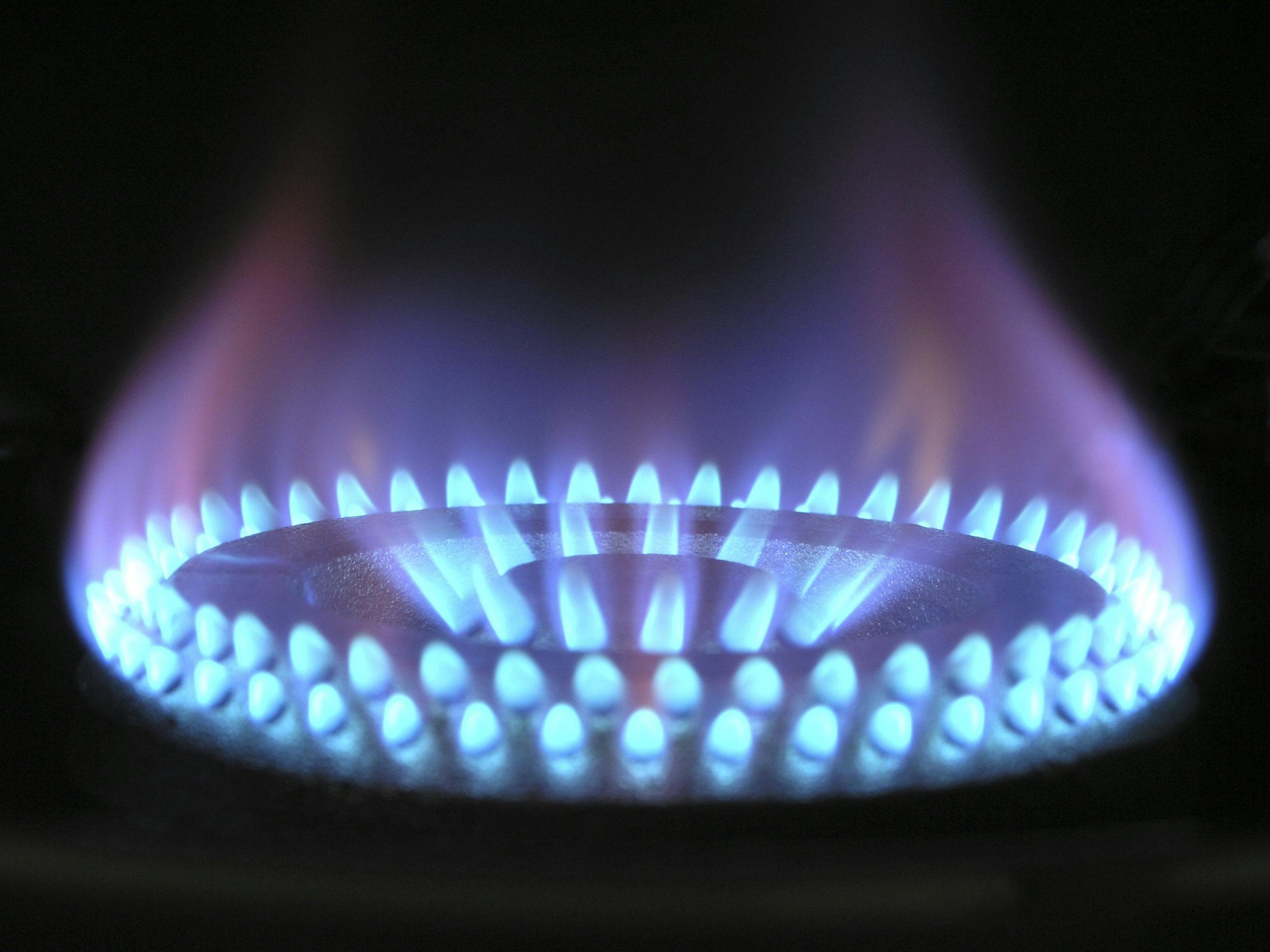
1. Premixed Combustion Fundamentals
Definition
In premixed combustion, fuel and oxidizer are mixed at the molecular level before ignition .
After ignition, a flame front propagates through the mixture, converting reactants into products.
Key features:
Reactants already mixed
Flame propagates into fresh mixture
Reaction controlled by chemistry and molecular diffusion
Because mixing occurs before ignition, mixing is not the dominant process controlling combustion.
Why Premixed Combustion is Used
Premixed combustion is widely used because it allows control of the maximum flame temperature.
Lower flame temperatures can be achieved by:
Lean mixtures
Dilution with exhaust gases
This reduces NOx emissions, which are strongly temperature dependent .
Main Challenges
Premixed flames present several engineering difficulties:
Flashback
The flame propagates upstream into the fuel supply when:
Flow velocity < flame propagation speed.
Blowoff
The flame is pushed downstream and extinguished when:
Flow velocity > flame propagation speed.
Combustion instabilities
Pressure waves interact with heat release, producing oscillatory behavior that may damage the combustor
2. Flame Types in Combustion Systems
Three main combustion configurations exist.
Premixed Flames
Fuel and oxidizer are mixed before ignition.
Characteristics:
Flame propagates into reactants
Flame speed determined by chemistry and diffusion
Common in gas turbines and engines
Non-Premixed (Diffusion) Flames
Fuel and oxidizer enter separately.
Combustion occurs where mixing happens.
Characteristics:
Reaction controlled by mixing rate
Flame located where mixture becomes stoichiometric
Partially Premixed Flames
Combination of both mechanisms.
Some reactants are premixed, while additional mixing occurs in the flow field
This configuration appears frequently in real combustors.
3. Structure of a Laminar Premixed Flame
A laminar premixed flame contains two main zones.
Preheat Zone
Heat diffuses from burned gases into the unburned mixture.
Effects:
Temperature increases gradually
Chemical reactions remain weak
Radicals begin to appear
Heat diffusion prepares the mixture for ignition.
Reaction Zone
The main chemical reactions occur.
Characteristics:
Rapid fuel oxidation
Strong heat release
Large temperature increase
Products such as CO₂ and H₂O are formed.
This region is extremely thin, often millimeters or less
Burned Gas Region
After the reaction zone:
Combustion is complete
Temperature reaches the adiabatic flame temperature
Composition becomes stable
4. Flame Speed
The laminar flame speed is a key property of premixed combustion.
It represents the velocity at which the flame propagates into the fresh mixture.
It depends on:
Chemical kinetics
Molecular diffusion
Mixture composition
Pressure
Temperature
In steady conditions, flame speed balances the incoming flow velocity.
This balance explains the conical Bunsen flame shape seen in burners
Flame Thickness
Flame thickness is the distance across the flame where:
Temperature rises from reactant value to product value.
Typical order of magnitude:
millimeters or smaller.
Capturing the internal flame structure requires very fine meshes, which is often impractical in CFD simulations
5. Deflagration vs Detonation
Two combustion regimes exist.
Deflagration
Typical premixed flame.
Characteristics:
Subsonic propagation
Driven by heat diffusion
Flame speed controlled by chemistry
Most industrial flames belong to this regime.
Detonation
Supersonic combustion wave.
Characteristics:
Propagation driven by shock waves
Extremely fast reactions
Strong pressure increase
These require compressible solvers in CFD simulations
6. Progress Variable
Instead of tracking individual species, combustion progress can be described by a progress variable.
The progress variable represents the fraction of the reaction completed.
Properties:
0 → unburned mixture
1 → fully burned products
It can also be interpreted as:
normalized temperature
fraction of released chemical energy
This variable is widely used in combustion modeling.
7. Flame Structure in Progress Space
The reaction rate varies strongly with the progress variable.
Typical behavior:
Low reaction rates in fresh mixture
Maximum reaction rate in the flame zone
Zero reaction rate in products
High activation energy reactions produce very thin reaction zones, concentrating combustion in narrow regions.
This explains why resolving flames numerically is difficult.
8. Combustion Modeling in CFD
Combustion simulations solve several coupled equations:
Mass conservation
Momentum
Energy
Species transport
Turbulence models
These equations must be combined with chemical kinetics models
Combustion Model Categories
Fluent combustion models fall into two main groups
Fast Chemistry Models
Assume chemical reactions occur instantly.
Examples:
Eddy Dissipation model
Premixed combustion model
Equilibrium model
Flamelet models
Useful when mixing limits reaction rate.
Finite Rate (Slow) Chemistry Models
Explicitly solve reaction kinetics.
Examples:
Laminar finite rate
Eddy Dissipation Concept (EDC)
PDF transport models
Necessary for:
pollutant prediction
ignition/extinction
slow chemistry processes
9. Detailed Chemical Mechanisms
Real combustion chemistry is extremely complex.
Typical mechanisms contain:
tens to hundreds of species
hundreds of reactions
Example:
Methane combustion may involve more than 100 reactions.
Each species participates in multiple reactions, creating complex chemical networks.
Mechanism Types
Three main levels of chemical mechanisms exist.
Detailed mechanisms
Large number of species
High accuracy
High computational cost
Skeletal mechanisms
Reduced number of species
Important reactions retained
Reduced mechanisms
Simplified models
Assumptions such as quasi-steady species
There is always a trade-off between:
accuracy vs computational cost.
10. CHEMKIN Mechanisms in CFD
Detailed chemical mechanisms are typically imported using CHEMKIN format.
A CHEMKIN model includes:
Reaction mechanism file
Thermodynamic database
Transport property database .
This approach allows Fluent to simulate complex combustion chemistry without manually defining hundreds of reactions.
11. Chemical Stiffness
Combustion chemistry exhibits very different reaction time scales.
Typical range:
10⁻¹² s to 1 s
Examples:
Radical reactions → extremely fast
Pollutant formation → very slow
These differences create stiff systems of equations, which are difficult and expensive to solve numerically.
12. Chemistry Acceleration Techniques
Fluent includes several tools to reduce computational cost.
ISAT (In-Situ Adaptive Tabulation)
A runtime chemistry database.
Instead of recomputing chemistry every time:
previously computed states are stored
similar states are retrieved using interpolation
Typical acceleration:
10× to 1000× faster calculations
Dynamic Mechanism Reduction
Automatically removes unimportant reactions during the simulation.
Benefits:
smaller chemical system
faster integration
Chemistry Agglomeration
Groups similar chemical states to reduce computational complexity.
13. Dimensionless Numbers in Combustion
Several dimensionless numbers characterize combustion regimes.
Reynolds Number
Determines whether the flow is laminar or turbulent.
High Reynolds number → turbulent combustion.
Damköhler Number
Ratio of flow time to chemical time.
Large Damköhler number: reaction faster than mixing.
Karlovitz Number
Measures the influence of turbulence on the flame structure.
Mach Number
Determines compressibility effects.
Low Mach numbers typically allow pressure-based solvers
Engineering Interpretation Framework
When analyzing premixed combustion problems:
Is the flame laminar or turbulent?
Is combustion mixing-limited or chemistry-limited?
What mechanism complexity is required?
Can chemistry acceleration tools be used?
Is the flame thickness resolved by the mesh?
These decisions determine the modeling strategy.
Study Priorities
Focus especially on:
Premixed flame structure
Laminar flame speed
Deflagration vs detonation
Progress variable concept
Combustion modeling approaches in CFD
Detailed vs reduced chemical mechanisms
Chemistry stiffness and acceleration methods
Key Takeaways
Premixed flames propagate into fresh mixtures at a characteristic flame speed.
Flame structure consists of preheat and reaction zones.
Combustion modeling couples fluid mechanics, chemistry, and thermodynamics.
Detailed chemical mechanisms create stiff systems of equations.
CFD simulations rely on reduced mechanisms and chemistry acceleration techniques.