

Combustion and Reactions Chapter 4: Turbulent Combustion
This chapter introduces turbulent combustion as the realistic regime for most engineering systems, where turbulence and chemical reactions interact strongly. It develops the conceptual and mathematical tools needed to model this interaction: DNS, RANS, LES, Favre averaging, scalar statistics, and PDF methods. The focus is on understanding why turbulence fundamentally changes combustion behavior and why modeling becomes significantly more complex
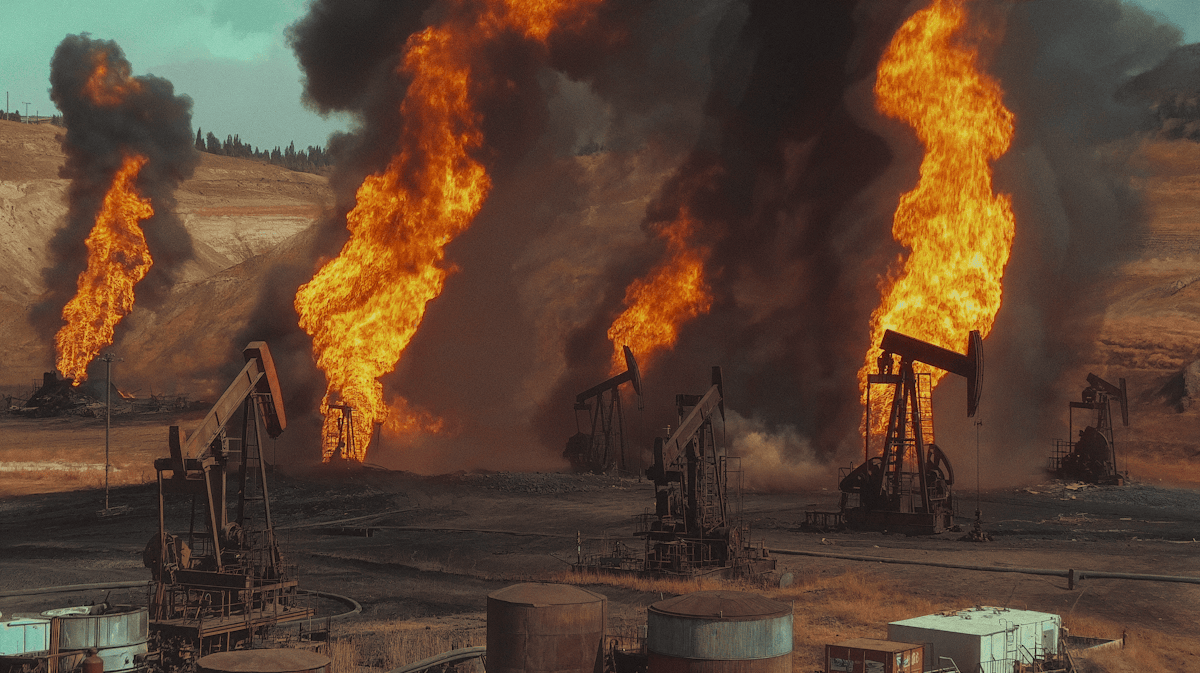
Context and Motivation
In real engineering devices, combustion is almost always turbulent by design:
Gas turbines
IC engines
Industrial burners
Fires
Reason:
→ Turbulence enhances mixing and heat transfer, leading to faster and more stable combustion
Physically, this means:
Reactants are brought together faster
Heat is redistributed more efficiently
Flames become stronger but more complex
However, turbulence introduces:
Random fluctuations
Wide range of length/time scales
Strong coupling with chemistry
This makes turbulent combustion one of the most difficult problems in CFD.
Main Concepts
Turbulence–Chemistry Interaction
The defining feature:
→ Two-way coupling
Turbulence affects combustion:
Enhances mixing → increases reaction rates
Combustion affects turbulence:
Heat release → changes density, viscosity, velocity fields
Physically:
The flame is not independent of the flow
The flow is not independent of the flame
They evolve together.
Time Scale Competition (Key Idea)
The central parameter is the ratio of:
Mixing time (turbulence)
Chemical time (reaction)
This ratio defines combustion regimes.
Damköhler number (Da):
High Da → fast chemistry → thin flame sheets
Low Da → slow chemistry → distributed reaction
Interpretation:
If mixing is slow → reaction limited by mixing
If chemistry is slow → reaction limited by kinetics
Turbulent Combustion Regimes
1. Flamelet regime (fast chemistry)
Reaction zones remain thin
Turbulence wrinkles and stretches flames
Flame behaves like many laminar flamelets
2. Distributed regime (slow chemistry)
Reaction occurs over a larger volume
No clear flame front
Strong turbulence–chemistry coupling
These regimes directly determine which model to use
Modeling Framework / Formulations
1. DNS, RANS, LES (Core CFD Approaches)
DNS (Direct Numerical Simulation)
Resolves all turbulence scales
No modeling assumptions
Reality:
Computationally infeasible for real systems
Only small domains and simple chemistry possible
Use:
→ Fundamental research
RANS (Reynolds-Averaged)
Solves time-averaged fields
All turbulence effects are modeled
Implications:
Fast and practical
Loses instantaneous fluctuations
Main issue:
→ Introduces closure problems, especially for reaction terms
LES (Large Eddy Simulation)
Resolves large turbulent structures
Models only small scales
Key idea:
Large eddies control mixing → directly resolved
Advantages:
More accurate than RANS for mixing-driven processes
Captures unsteady flame behavior
Limitation:
Expensive, especially near walls
Engineering Insight:
Large eddies contain most energy
Small eddies dissipate energy
LES resolves:
→ The most physically important structures for combustion
2. Favre Averaging (Variable Density Flows)
Why Needed
In combustion:
Density varies strongly due to heat release
Standard averaging creates:
Complex additional correlation terms
Favre Averaging Idea
Instead of simple averaging:
→ Use density-weighted averaging
Physically:
Gives more importance to high-density regions
Result:
Simplifies governing equations
Reduces complexity of turbulent correlations
Interpretation:
Favre averaging:
→ Separates variables into:
Mean value
Fluctuations relative to density
This is essential for:
Species transport
Energy equations
3. Closure Problem (Core Difficulty)
After averaging:
New unknown terms appear:
Turbulent fluxes
Reaction source terms
The biggest challenge:
→ Chemical reaction terms
Reason:
Reaction rates depend nonlinearly on:
Temperature
Species concentrations
Therefore:
Mean reaction ≠ reaction at mean conditions
This is the turbulence–chemistry interaction problem
4. Statistical Description: PDF Approach
Why PDFs?
In turbulence:
Variables fluctuate strongly
Instead of single values:
→ Use probability distributions
Concept
The PDF gives:
Probability of finding a certain value (e.g., mixture fraction, temperature)
Importance
Reaction rates depend on:
→ Full distribution, not just averages
This allows:
More accurate modeling of nonlinear chemistry
Types
Assumed PDF models (simplified shapes)
Transported PDF models (solve transport equation)
Trade-off:
Accuracy vs computational cost
Numerical / CFD Aspects
Main Challenges
From CFD perspective:
Many species equations
Stiff chemistry
Wide range of scales
Strong nonlinear coupling
Model Choices in Practice
From Fluent:
Fast chemistry models (Da >> 1):
Eddy Dissipation Model
Non-premixed model
Finite-rate models:
Eddy Dissipation Concept (EDC)
Finite-rate chemistry
Flamelet models
PDF models
LES Workflow Insight
From LES application chapter:
Mesh must resolve large eddies
Time step must capture unsteady behavior
Sub-grid models handle smallest scales
Important:
→ LES becomes more accurate as resolution increases
Physical Interpretation and Engineering Intuition
Mixing Controls Everything
In turbulent combustion:
→ Mixing is often the limiting factor
Large eddies:
Stretch and fold scalar fields
Create thin layers → intense reactions
Flame Structure
Instead of smooth laminar flames:
Flames become:
Wrinkled
Intermittent
Unsteady
Physically:
Flame surface area increases → higher burning rate
Unsteady Behavior Matters
From LES examples:
Large-scale structures strongly affect mixing and combustion
Time-averaged (RANS) results:
→ May miss important physics
Engineering Judgment
Use RANS for:
Design iterations
Steady predictions
Use LES for:
Flame instability
Detailed mixing
Research-level accuracy
Applications
Gas turbines (lean premixed combustion)
IC engines (diesel, SI engines)
Industrial furnaces
Fire dynamics
Rocket propulsion
Limitations and Assumptions
RANS
Cannot capture transient flame structures
Strong modeling dependence
LES
High computational cost
Difficult near walls
DNS
Not practical for engineering
All Models
Require turbulence–chemistry closure
Sensitive to modeling assumptions
Study Priorities
If short on time:
Turbulence–chemistry interaction concept
Damköhler number interpretation
DNS vs RANS vs LES differences
Favre averaging (why it exists)
Closure problem (reaction term)
PDF concept and purpose
Key Takeaways
Turbulent combustion is dominated by mixing–chemistry interaction
The Damköhler number defines combustion regime
DNS, RANS, LES differ by how turbulence is treated
Favre averaging is essential for variable-density flows
The reaction source term closure is the central challenge
PDF methods capture nonlinear effects of fluctuations
LES provides the best balance between accuracy and feasibility for modern CFD